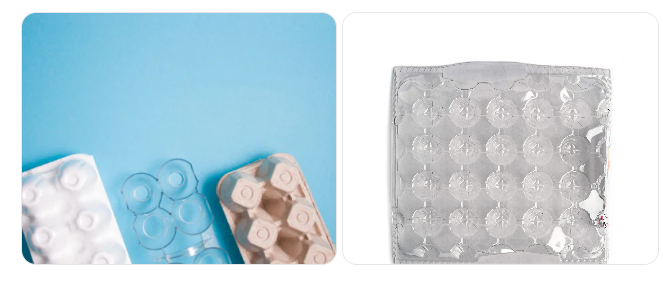
Egg packaging plays a crucial role in ensuring that delicate eggs reach consumers safely and intact. In recent years, paper egg trays have become increasingly popular due to their eco-friendly nature and cost-effectiveness. However, a common concern among buyers, retailers, and poultry businesses is:
Are paper egg trays strong enough to protect eggs?
Is it a myth, or is there truth behind this belief? Let’s explore the facts in detail.
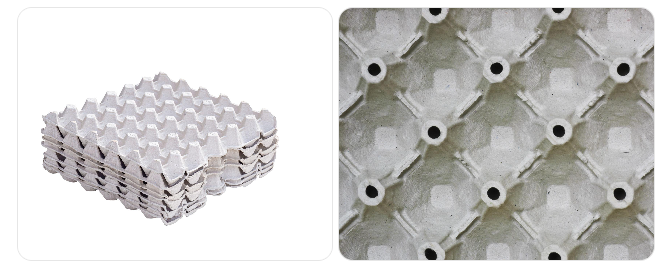
What Are Paper Egg Trays?
Paper egg trays are molded packaging products made from recycled paper pulp, newspapers, and cardboard waste. They are designed specifically to hold eggs securely in individual compartments, minimizing movement and preventing cracks during storage and transportation.
These trays are widely used by:
- Poultry farms
- Egg wholesalers
- Retail stores
- Supermarkets
- Export businesses
Their eco-friendly composition makes them a preferred alternative to plastic packaging.
Why Do People Think Paper Egg Trays Are Weak?
The myth that paper egg trays are not strong enough comes from a few assumptions:
- Paper seems less durable than plastic.
- They may look soft or lightweight.
- Exposure to moisture can reduce strength.
- People assume heavier material equals better protection.
While these concerns are understandable, they don’t tell the complete story.
The Science Behind Paper Egg Tray Strength
Paper egg trays are not ordinary paper. They are made using molded pulp technology, which creates a thick, structured design that offers:
1. Shock Absorption
The fiber structure absorbs impact energy, reducing the force transferred to the eggs during drops or vibrations.
2. Cushioning Effect
Each egg sits in a molded pocket that limits movement, preventing collisions between eggs.
3. Load Distribution
When stacked properly, trays distribute weight evenly across the structure, minimizing breakage.
4. Compression Strength
High-quality trays are tested for stacking pressure and can withstand significant loads during transport.
So technically, well-manufactured paper egg trays are engineered for protection, not just presentation.
Paper vs Plastic Egg Trays: Which Is Stronger?
Let’s compare them practically:
| Feature | Paper Egg Trays | Plastic Egg Trays |
|---|---|---|
| Shock Absorption | Excellent | Moderate |
| Reusability | Limited | High |
| Eco-Friendly | 100% recyclable & biodegradable | Often non-biodegradable |
| Moisture Resistance | Moderate | High |
| Cost | Affordable | More expensive |
Interestingly, paper trays often absorb impact better than rigid plastic trays, which may transfer shock directly to the eggs.
Do Paper Egg Trays Break Easily?
Not necessarily. The strength of paper egg trays depends on:
- Quality of recycled pulp used
- Thickness of molded material
- Manufacturing process
- Proper stacking technique
- Storage conditions
Low-quality trays may collapse under moisture or heavy weight, but premium-grade trays are designed for commercial transport and export use.
Real-World Performance: Fact Check
Fact #1: Used by Large Poultry Farms
Major egg distributors rely heavily on paper trays for bulk transportation.
Fact #2: Used in Export Packaging
Paper trays are commonly used in global egg exports because of their protective and lightweight design.
Fact #3: Tested for Durability
Manufacturers conduct compression and drop tests before supplying trays to large buyers.
These facts strongly suggest that the belief about weakness is largely a myth.
Situations Where Paper Egg Trays May Fail
To be honest and balanced, paper trays can fail under certain conditions:
- Prolonged exposure to water or high humidity
- Extremely rough handling
- Overloading beyond stacking limits
- Using low-quality or thin trays
However, under normal supply chain conditions, they perform effectively.
Environmental Advantage: A Big Bonus
Beyond strength, paper egg trays offer significant environmental benefits:
- Made from recycled materials
- Biodegradable and compostable
- Reduce plastic pollution
- Lower carbon footprint
- Sustainable production cycle
As sustainability becomes a global priority, paper packaging is gaining even more trust.
Expert Verdict: Myth or Fact?
After evaluating the design, real-world use, and performance testing:
It is largely a myth that paper egg trays are not strong enough to protect eggs.
High-quality paper egg trays:
- Absorb shock effectively
- Provide excellent cushioning
- Are suitable for stacking
- Are widely used in commercial distribution
The key lies in choosing the right manufacturer and maintaining proper storage conditions.
How to Choose Strong Paper Egg Trays
If you are a poultry farmer, distributor, or egg trader, consider these tips:
- Check tray thickness and pulp density
- Ask about compression strength testing
- Avoid very thin or brittle trays
- Ensure proper dry storage
- Stack within recommended limits
By following these guidelines, paper trays will provide reliable egg protection.
Final Conclusion
The belief that paper egg trays are too weak to protect eggs is mostly based on perception rather than facts. Modern molded pulp trays are scientifically designed to cushion, absorb shock, and distribute weight efficiently.
While no packaging is 100% damage-proof, high-quality paper egg trays are strong, sustainable, cost-effective, and widely trusted across the poultry industry.
So next time someone says paper trays are not strong enough, you’ll know the truth:
👉 It’s more myth than fact.