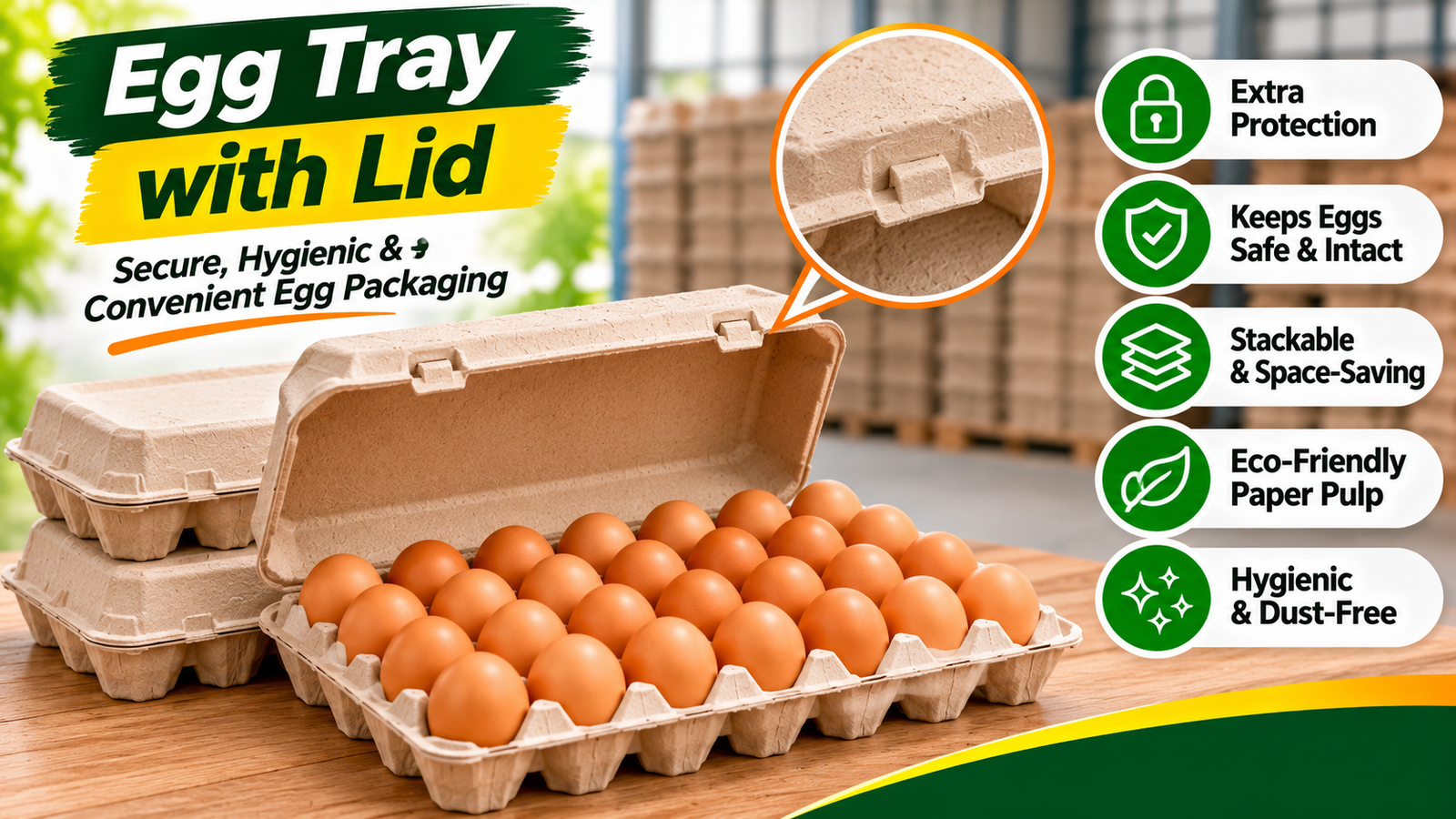
Eggs are delicate products that require suitable packaging during storage, handling and transportation. Whether you operate a poultry farm, wholesale egg business, retail store or egg distribution company, choosing the right packaging can make a significant difference in how eggs are organised and handled.
An egg tray with lid is a practical packaging option designed to hold eggs in individual compartments while providing a covering over the top. The lid helps enclose the eggs, making the packaging more convenient for stacking, storage and handling.
In this guide, we will explore the features, benefits, applications and important factors to consider when choosing an egg tray with a lid for your business.
What Is an Egg Tray with Lid?
An egg tray with lid is a packaging container designed with two main sections: a base tray and a top cover. The base contains individual compartments to hold eggs, while the lid closes over the eggs to provide an enclosed packaging structure.
Depending on the design, these trays may be manufactured using moulded paper pulp or other packaging materials. Paper pulp versions are commonly made using recycled paper-based materials.
Unlike an open egg tray, a covered design provides an additional layer between the eggs and the surrounding environment. Its suitability depends on the tray’s construction, dimensions, material quality and intended application.
Key Features of an Egg Tray with Lid
Before selecting an egg tray with lid, it is important to understand the features that make this packaging useful.
1. Covered Packaging Design
The lid covers the upper portion of the tray and helps keep the eggs enclosed during routine storage and handling. It also reduces direct exposure to dust and accidental contact from above when properly closed.
2. Individual Egg Compartments
The base tray contains separate sections for individual eggs. These compartments help organise eggs and reduce direct egg-to-egg contact during handling.
3. Moulded Paper Pulp Material
Some egg trays with lids are manufactured from moulded paper pulp. This material is formed into a structured shape that can hold eggs in separate compartments.
Paper-based packaging may also be recyclable where suitable local recycling facilities accept it.
4. Convenient Stacking
A suitable lid-and-base design can make trays easier to arrange during storage. However, stacking capacity depends on the strength, shape and specifications of the packaging.
5. Easy Handling
The covered design can make packaging more convenient to move and organise. Businesses should always check that the lid closes securely and that the tray is suitable for their egg size.
Benefits of Using an Egg Tray with Lid
Choosing the right egg packaging can support better organisation and handling throughout the supply chain.
Helps Protect Eggs During Handling
Eggs have fragile shells and can crack if they experience excessive pressure or impact. An appropriately designed tray holds eggs in separate compartments, while the lid provides additional coverage from above.
Although this packaging can help reduce handling risks, it cannot guarantee that eggs will never break. Careful handling and suitable stacking remain important.
Helps Keep Eggs Organised
Individual compartments help maintain separation between eggs. This makes it easier for poultry farms, distributors and retailers to arrange eggs during storage and routine handling.
Provides Additional Cover
An enclosed tray helps reduce direct exposure to dust and accidental contact from above. This can be useful when eggs are stored or moved between different handling areas.
Supports Space-Efficient Storage
Some covered egg trays are designed to fit together or stack with similar packaging units. This can help businesses organise their available storage space more effectively.
Always confirm the stacking design and load capacity before placing multiple trays on top of one another.
Suitable for Different Egg Businesses
Egg trays with lids can be useful for businesses that need covered packaging for handling, storage, distribution or retail applications. The appropriate design depends on the quantity of eggs, packaging requirements and supply chain.
Egg Tray with Lid vs Open Egg Tray
Both covered and open egg trays have useful applications. The right choice depends on how eggs are stored, handled and transported.
| Feature | Egg Tray with Lid | Open Egg Tray |
|---|---|---|
| Design | Base with top cover | Open-top design |
| Coverage | Covers eggs from above | Eggs remain exposed from above |
| Storage | Useful for enclosed storage | Suitable for open stacking systems |
| Handling | Provides additional covering | Allows easy access to eggs |
| Application | Covered packaging requirements | Bulk handling and distribution |
A covered egg tray may be more suitable when additional coverage is required, while an open tray may be practical for certain bulk-handling operations.
For a detailed capacity comparison, read our guide on 30 Egg Tray vs 12 Egg Tray vs 6 Egg Tray.
Where Are Egg Trays with Lids Used?
Egg trays with lids can serve different types of businesses depending on their design and capacity.
1. Poultry Farms
Poultry farms handle eggs regularly and need packaging that supports organised collection, storage and movement. Covered trays may be useful where additional protection from above is required.
2. Egg Wholesalers
Wholesalers manage large quantities of eggs and require practical packaging for sorting, storage and distribution. The choice of tray should match their handling and stacking requirements.
3. Retail Stores
Retail businesses may use covered egg packaging to keep eggs organised and provide a more enclosed presentation for customers.
4. Egg Distributors
Distributors move eggs between suppliers, warehouses and retail locations. Suitable covered packaging can help organise products during different stages of distribution.
5. Food Supply Businesses
Businesses involved in supplying eggs to restaurants, hotels and other food-service operations may consider covered trays depending on their storage and transportation requirements.
How to Choose the Right Egg Tray with Lid
Not every covered egg tray is suitable for every business. Consider these factors before making a purchase.
1. Check the Tray Capacity
First, determine how many eggs the tray needs to hold. Compare the available capacity with your daily packaging and distribution requirements.
2. Examine Material Quality
Check the material used in manufacturing the tray. For paper pulp packaging, examine the moulded structure, surface consistency and overall strength.
3. Check Egg Compartment Size
The compartments should be suitable for the size and shape of the eggs you handle. A poor fit can affect stability during packaging.
4. Inspect the Lid Design
The lid should fit the base properly and close securely. Check the locking or joining mechanism, if present, before purchasing in bulk.
5. Evaluate Stacking Strength
If you plan to store multiple trays together, check whether the packaging is designed for stacking. Avoid excessive stacking pressure that could damage the eggs.
6. Compare Bulk Pricing
For poultry farms and wholesalers, compare the per-unit cost, order quantity, material specifications and supply consistency before selecting a supplier.
For more guidance, read our article on How to Choose Between Plastic and Paper Pulp Egg Trays.
Tips for Storing and Transporting Eggs in Covered Trays
Even good-quality packaging requires proper handling. Follow these practices to support safer egg storage and transportation:
- Place eggs carefully into their individual compartments.
- Make sure the lid is properly closed before moving the tray.
- Store trays on a clean, stable and level surface.
- Avoid placing excessive weight on the upper trays.
- Protect packaged eggs from moisture and unsuitable storage conditions.
- Handle trays carefully during loading and unloading.
- Use appropriate transport arrangements to minimise unnecessary movement.
You can also explore our guide on How to Store and Transport Eggs Safely Using Paper Trays.
Why Choose Paper Pulp Egg Packaging?
Paper pulp is a widely used material in protective packaging. It can be moulded into different shapes and compartment structures, making it suitable for applications such as egg packaging.
Some potential advantages include:
- Manufactured using paper-based material.
- Can be moulded into individual egg compartments.
- Lightweight packaging structure.
- Can be recyclable where local facilities accept the material.
- Available in different packaging designs and specifications.
The actual performance of a paper pulp egg tray depends on its manufacturing quality, thickness, moisture conditions and intended use.
Why Consider Veena Egg Tray?
Veena Egg Tray focuses on paper-based egg packaging solutions for businesses involved in egg handling and distribution.
When selecting an egg tray, it is important to consider the packaging material, compartment design, product specifications and quantity requirements. Businesses should confirm the available tray designs, dimensions and order details directly with the supplier before purchasing.
Visit Veena Egg Tray to learn more about its egg packaging solutions.
Frequently Asked Questions (FAQs)
1. What is an egg tray with lid?
An egg tray with lid is a packaging container consisting of a base with individual egg compartments and a top cover that closes over the eggs.
2. What is the purpose of a lid on an egg tray?
The lid provides additional coverage from above, helps enclose the eggs and supports organised storage and handling.
3. Are egg trays with lids suitable for transportation?
They may be suitable for transportation when their material, design and stacking strength match the requirements. Proper handling and suitable transport conditions are also necessary.
4. Are paper pulp egg trays with lids eco-friendly?
Paper pulp trays are made using paper-based materials, often including recycled paper. Their environmental benefits depend on manufacturing practices and whether local recycling facilities accept them.
5. Can egg trays with lids be stacked?
Some designs are made for stacking. Always check the manufacturer’s stacking recommendations and avoid excessive weight.
6. How do I choose the right egg tray with lid?
Consider capacity, egg compartment size, material quality, lid fit, stacking strength, pricing and supplier reliability.
7. Who can use egg trays with lids?
Poultry farms, egg wholesalers, distributors, retailers and food supply businesses may use covered egg trays depending on their packaging requirements.
Conclusion
An egg tray with lid can be a practical choice for businesses looking for covered egg packaging. Its enclosed design, individual compartments and potential for organised stacking make it useful for different egg-handling applications.
Before purchasing, compare the tray capacity, material quality, lid fit and stacking strength. Choosing packaging that matches your operational requirements can help improve egg organisation and handling throughout your supply chain.
Explore paper-based egg packaging solutions from Veena Egg Tray and choose a design that suits your business requirements.