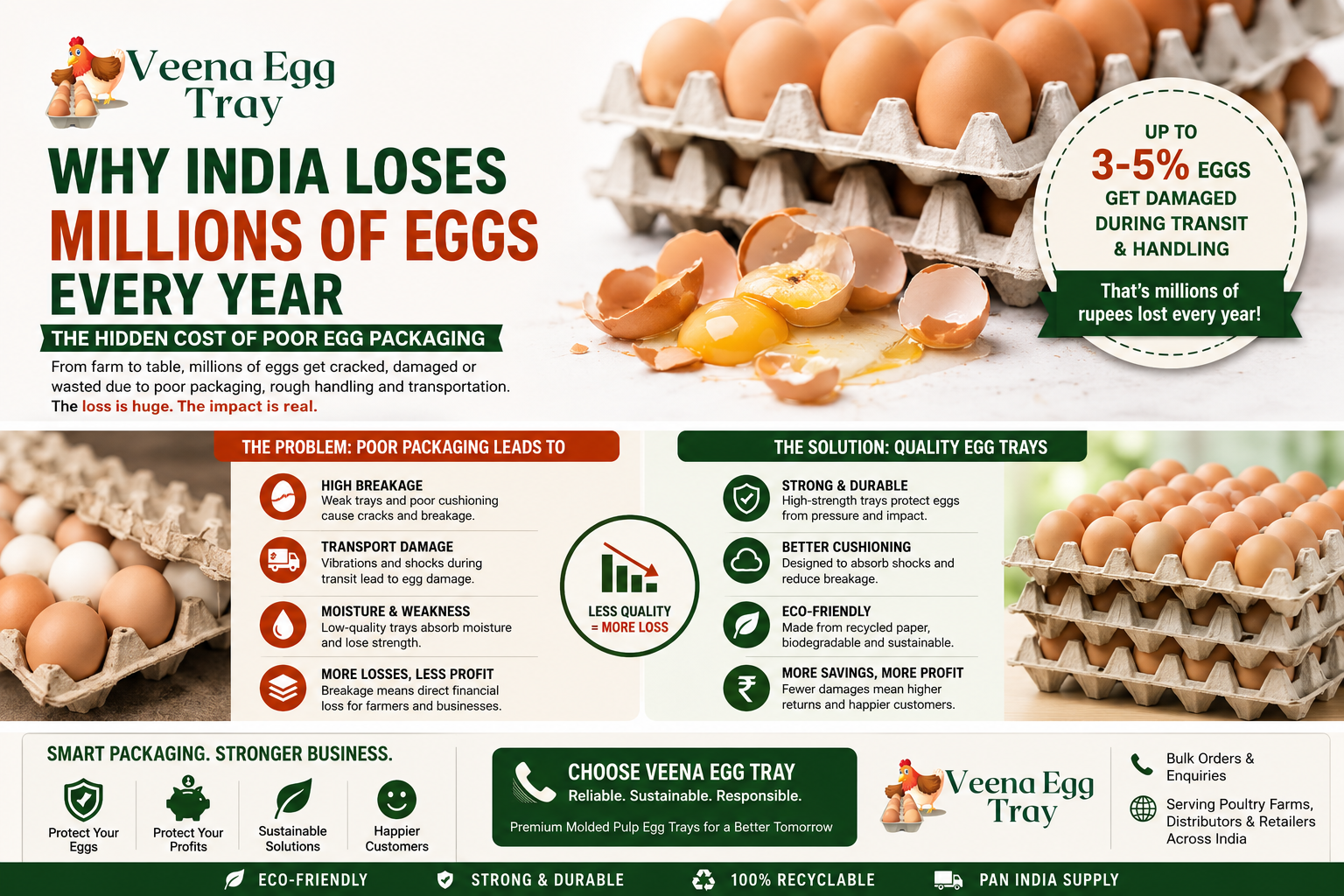
India is one of the largest egg-producing countries in the world, supplying billions of eggs annually to households, restaurants, bakeries, and food processing industries. While much attention is given to poultry farming, feed quality, and production techniques, one critical factor often goes unnoticed—egg packaging.
Every year, a significant number of eggs are damaged before they reach consumers. Cracked shells, transportation losses, improper stacking, and poor handling result in substantial financial losses for farmers, wholesalers, and retailers. The hidden culprit behind many of these losses is inadequate egg packaging.
The Journey of an Egg
An egg’s journey begins at a poultry farm and may involve multiple stages before reaching the customer:
- Collection at the farm
- Storage and sorting
- Transportation to wholesalers
- Distribution to retailers
- Final purchase by consumers
At every stage, eggs are exposed to movement, vibration, pressure, and environmental conditions. Without proper protection, breakage becomes inevitable.
How Poor Packaging Increases Egg Breakage
Many businesses still rely on low-quality or worn-out trays that fail to provide adequate support. Common problems include:
Weak Structural Strength
Inferior trays collapse under stacking pressure, causing eggs to crack during transport.
Poor Cushioning
Without proper shock absorption, road vibrations and handling impacts directly affect eggshells.
Moisture Damage
Low-quality packaging materials absorb moisture and lose their structural integrity.
Repeated Reuse
Overused trays often become soft, damaged, and less effective at protecting eggs.
The Financial Impact on Poultry Businesses
Even a small percentage of breakage can result in major losses.
Consider a distributor transporting 100,000 eggs per month. A breakage rate of just 3% means:
- 3,000 damaged eggs
- Reduced profits
- Customer complaints
- Increased operational costs
Over a year, these losses can become substantial.
Why Molded Pulp Egg Trays Are Becoming the Industry Standard
Modern molded pulp egg trays are specifically designed to reduce damage throughout the supply chain.
Better Shock Absorption
The fiber structure absorbs impacts and vibrations during transportation.
Secure Egg Placement
Each egg sits in an individual cavity, reducing movement and collision.
Sustainable Manufacturing
Made from recycled paper and cardboard, molded pulp trays support environmentally responsible packaging.
Cost-Effective Protection
The cost of quality trays is significantly lower than the financial losses caused by broken eggs.
Sustainability and the Future of Egg Packaging
Consumers and businesses are increasingly prioritizing eco-friendly packaging. As India moves toward sustainable manufacturing practices, molded pulp egg trays offer several advantages:
- Recyclable
- Biodegradable
- Compostable
- Made from recycled materials
This makes them an ideal solution for poultry businesses seeking both performance and environmental responsibility.
Choosing the Right Egg Tray
When selecting egg packaging, businesses should evaluate:
- Tray strength
- Material quality
- Cushioning performance
- Stackability
- Environmental impact
A reliable egg tray supplier can help reduce product damage while improving operational efficiency.
Conclusion
The poultry industry often focuses on increasing production, but reducing losses can be equally important. Quality egg packaging plays a crucial role in protecting eggs, improving profitability, and supporting sustainable business practices.
As India’s egg production continues to grow, investing in durable molded pulp egg trays is no longer just a packaging decision—it’s a business decision.
About Veena Egg Tray
Veena Egg Tray manufactures high-quality molded pulp egg trays designed to protect eggs during storage and transportation. Our eco-friendly packaging solutions help poultry farms, distributors, and retailers reduce breakage while supporting a greener future.
Contact Veena Egg Tray today for bulk orders and reliable egg packaging solutions across India.