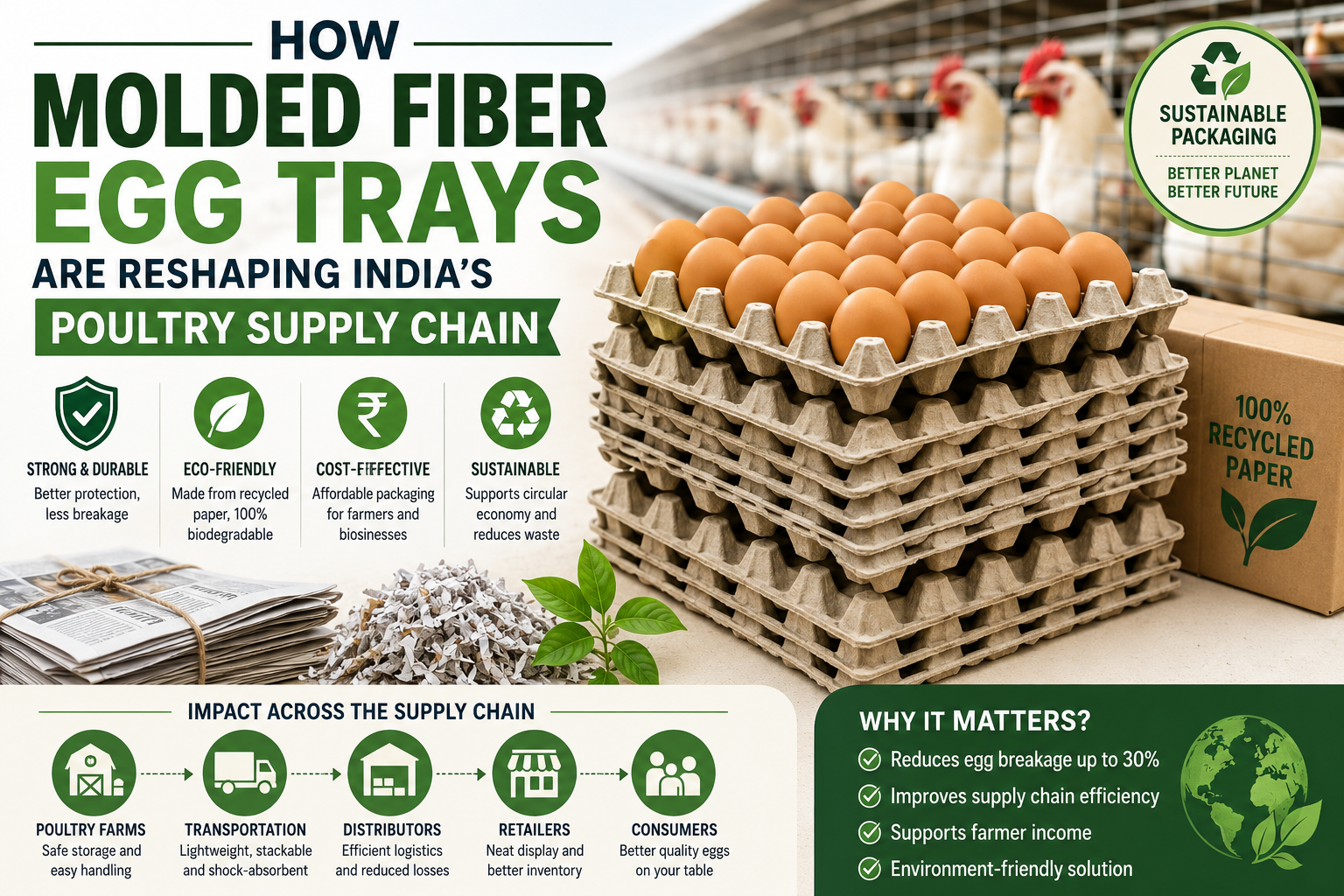
India’s poultry industry is one of the fastest-growing sectors in the agricultural economy, supplying billions of eggs to consumers every year. As egg production continues to rise, the need for safe, sustainable, and cost-effective packaging has become increasingly important. One innovation making a significant impact is the molded fiber egg tray.
Made primarily from recycled paper and cardboard, molded fiber egg trays are transforming how eggs are stored, transported, and distributed across the country. Beyond protecting eggs from damage, these eco-friendly packaging solutions are helping poultry businesses reduce costs, improve logistics, and support sustainability goals.
As the industry moves toward more environmentally responsible practices, molded fiber egg trays are emerging as a key component of India’s modern poultry supply chain.
What Are Molded Fiber Egg Trays?
Molded fiber egg trays are packaging products manufactured from recycled paper pulp. Waste materials such as newspapers, cardboard boxes, and office paper are processed into pulp and molded into trays specifically designed to hold eggs securely.
Unlike plastic alternatives, molded fiber trays are biodegradable, recyclable, and environmentally friendly. Their structure provides excellent cushioning, making them ideal for protecting fragile eggs during transportation and storage.
Today, molded fiber egg trays are widely used by poultry farms, wholesalers, retailers, and egg exporters throughout India.
Why Packaging Matters in the Poultry Industry
Eggs are among the most delicate food products in the supply chain. Even small impacts during transportation can lead to cracks, breakage, and financial losses.
Without proper packaging, poultry businesses face challenges such as:
- Increased product damage
- Higher transportation losses
- Reduced profitability
- Greater food waste
- Customer dissatisfaction
Molded fiber egg trays help solve these problems by providing secure compartments that keep eggs separated and protected throughout the distribution process.
Reducing Egg Breakage Across the Supply Chain
One of the biggest advantages of molded fiber egg trays is their ability to minimize breakage.
The trays are designed to absorb shocks and vibrations that occur during handling and transportation. Their molded structure prevents eggs from colliding with one another, significantly reducing the risk of cracks.
Benefits Include:
- Better protection during transit
- Reduced product losses
- Improved product quality
- Higher profits for poultry farmers
- Greater customer satisfaction
For businesses transporting eggs over long distances, this protection can result in substantial cost savings.
Supporting Efficient Transportation and Logistics
India’s poultry supply chain spans thousands of kilometers, connecting farms in rural areas with markets in urban centers.
Molded fiber egg trays improve logistics efficiency in several ways:
Lightweight Design
The trays are lightweight, helping reduce transportation costs while allowing larger quantities of eggs to be moved efficiently.
Easy Stacking
Their uniform shape allows for secure stacking during storage and transportation, maximizing warehouse space and vehicle capacity.
Better Inventory Management
Standardized packaging simplifies counting, handling, and inventory tracking throughout the supply chain.
These advantages contribute to smoother operations and improved productivity for poultry businesses.
A Sustainable Solution for Modern Poultry Farming
Sustainability is becoming a major focus for businesses and consumers alike. Molded fiber egg trays align perfectly with this trend because they are produced from recycled materials and can be recycled again after use.
Environmental Benefits
Made from Recycled Paper
Most molded fiber trays are manufactured using waste paper that would otherwise end up in landfills.
Biodegradable
Unlike plastic packaging, molded fiber trays naturally decompose without causing long-term environmental damage.
Lower Carbon Footprint
Using recycled raw materials generally requires fewer resources compared to manufacturing products from virgin materials.
Reduced Plastic Waste
As businesses shift toward eco-friendly packaging, molded fiber trays help reduce dependence on single-use plastics.
These benefits make molded fiber egg trays an environmentally responsible choice for the poultry industry.
Strengthening India’s Circular Economy
A circular economy focuses on reusing and recycling materials rather than discarding them after a single use.
Molded fiber egg trays play an important role in this system by transforming waste paper into valuable packaging products.
The process works as follows:
- Waste paper is collected.
- The paper is converted into pulp.
- The pulp is molded into egg trays.
- Trays are used throughout the poultry industry.
- Used trays can be recycled or naturally decomposed.
This cycle reduces waste, conserves resources, and creates economic value from discarded materials.
As India continues to promote recycling and sustainable manufacturing, molded fiber products are becoming increasingly important.
Benefits for Poultry Farmers and Businesses
For poultry producers, packaging is not just a necessity—it is an investment in product protection and business efficiency.
Molded fiber egg trays offer several commercial advantages:
Cost-Effective Packaging
The use of recycled materials helps keep production costs affordable, making the trays accessible for farms of all sizes.
Improved Product Safety
Better protection means fewer damaged eggs and reduced financial losses.
Enhanced Brand Reputation
Consumers increasingly prefer businesses that adopt environmentally responsible practices.
Greater Market Reach
Reliable packaging enables farmers to transport eggs safely over longer distances, opening access to new markets.
These benefits help poultry businesses remain competitive in a growing industry.
Technology Is Driving Industry Growth
Modern molded fiber manufacturing has evolved significantly over the past decade.
Today’s production facilities use:
- Automated pulp molding machines
- Energy-efficient drying systems
- Advanced quality control technology
- High-volume production lines
These innovations improve product consistency, increase manufacturing efficiency, and support growing demand from India’s poultry sector.
As technology continues to advance, molded fiber packaging is expected to become even more durable, sustainable, and cost-effective.
Future Outlook for Molded Fiber Egg Trays in India
The future looks promising for molded fiber egg trays due to several key factors:
- Rising egg consumption
- Growing poultry production
- Increased focus on sustainable packaging
- Expansion of recycling infrastructure
- Greater environmental awareness among consumers
As businesses seek greener alternatives to plastic packaging, demand for molded fiber products is expected to grow steadily.
This trend positions molded fiber egg trays as a crucial element of India’s sustainable agricultural and packaging ecosystem.
Conclusion
Molded fiber egg trays are doing far more than simply holding eggs. They are helping reshape India’s poultry supply chain by reducing breakage, improving logistics, supporting farmers, and promoting sustainable packaging practices.
By transforming recycled paper into valuable products, these trays also contribute to the country’s circular economy and environmental goals. As the poultry industry continues to expand, molded fiber egg trays will remain an essential tool for improving efficiency, reducing waste, and building a more sustainable future.