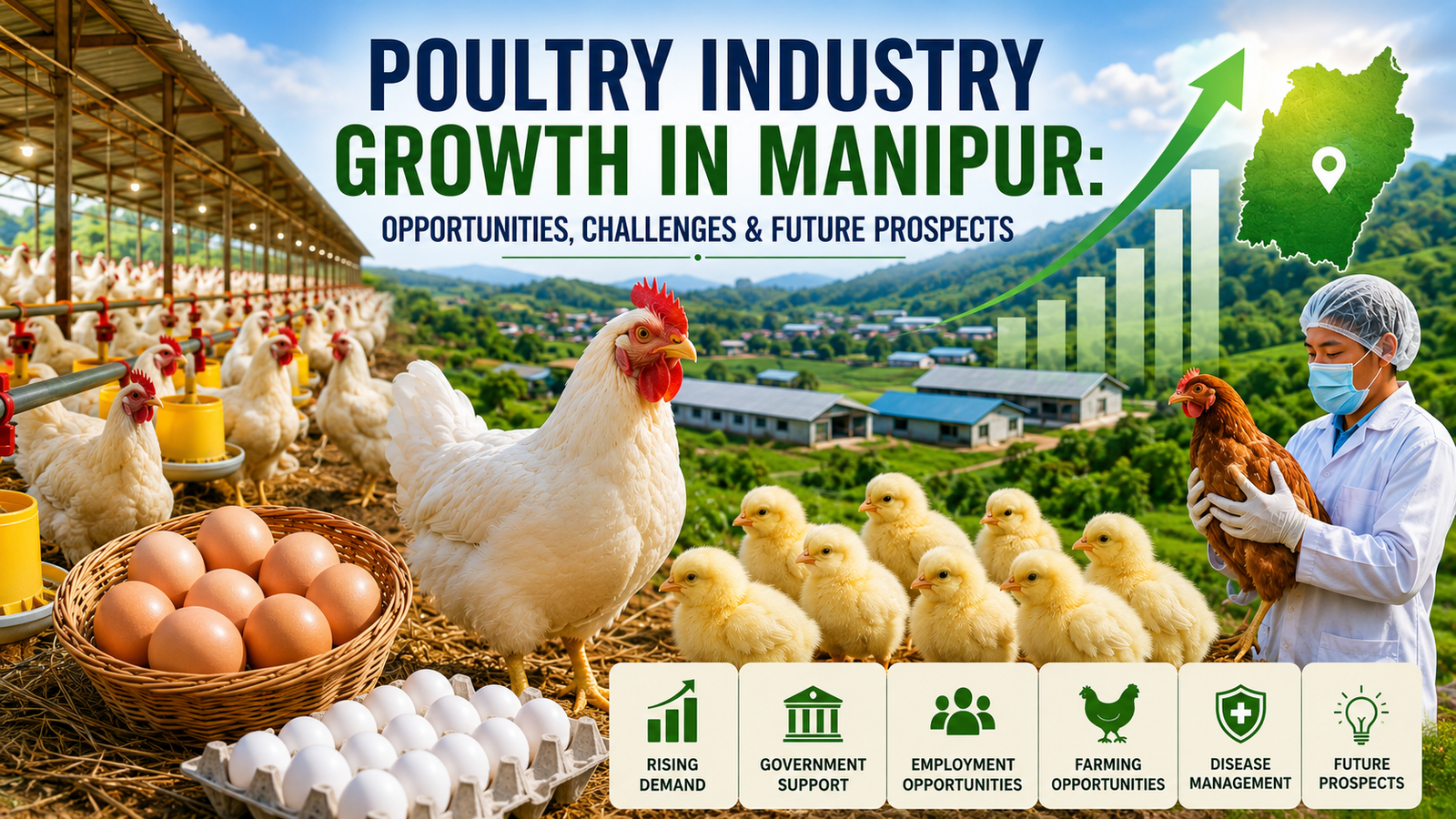
Poultry Industry Growth in Manipur: A Complete Guide
The poultry industry in Manipur has become one of the fastest-growing sectors in the state’s agricultural economy. Rising consumer demand for chicken meat and eggs, increasing awareness of protein-rich diets, and government support have encouraged thousands of farmers to adopt poultry farming as a reliable source of income.
Today, poultry farming is no longer limited to backyard production. Commercial broiler and layer farms are expanding across districts such as Imphal West, Bishnupur, Thoubal, and Kakching, creating employment opportunities while strengthening food security. Studies also highlight poultry farming as a key contributor to rural livelihoods despite challenges such as feed costs and disease management.
Why the Poultry Industry is Growing in Manipur
Several factors are driving the rapid expansion of poultry farming in Manipur.
1. Increasing Demand for Chicken and Eggs
As incomes rise and dietary habits change, more families are including poultry products in their daily meals. Chicken is one of the most affordable and preferred sources of animal protein, leading to steady demand throughout the year.
The hospitality sector, restaurants, hotels, educational institutions, and local markets further contribute to increasing poultry consumption.
2. Government Support
The Government of Manipur has introduced several initiatives to strengthen poultry production.
Some important developments include:
- Poultry breeding farms producing quality chicks
- Subsidized Day-Old Chick (DOC) distribution
- Veterinary healthcare improvements
- Disease diagnosis through advanced laboratories
- Support for backyard poultry farmers
- Training programs for modern poultry management
The state has expanded breeding infrastructure, including facilities capable of producing tens of thousands of day-old chicks monthly for farmers at subsidized rates. Veterinary hospitals, dispensaries, and upgraded diagnostic laboratories also help reduce disease outbreaks.
3. Employment Generation
The poultry industry creates employment across multiple sectors:
- Poultry farming
- Feed supply
- Hatcheries
- Veterinary services
- Transportation
- Egg distribution
- Meat processing
- Retail businesses
Many rural households depend on poultry farming as an additional source of income.
4. Suitable Climate
Many regions of Manipur have climatic conditions suitable for poultry farming. With proper housing, ventilation, and disease management, farmers can successfully raise broilers, layers, ducks, and indigenous birds.
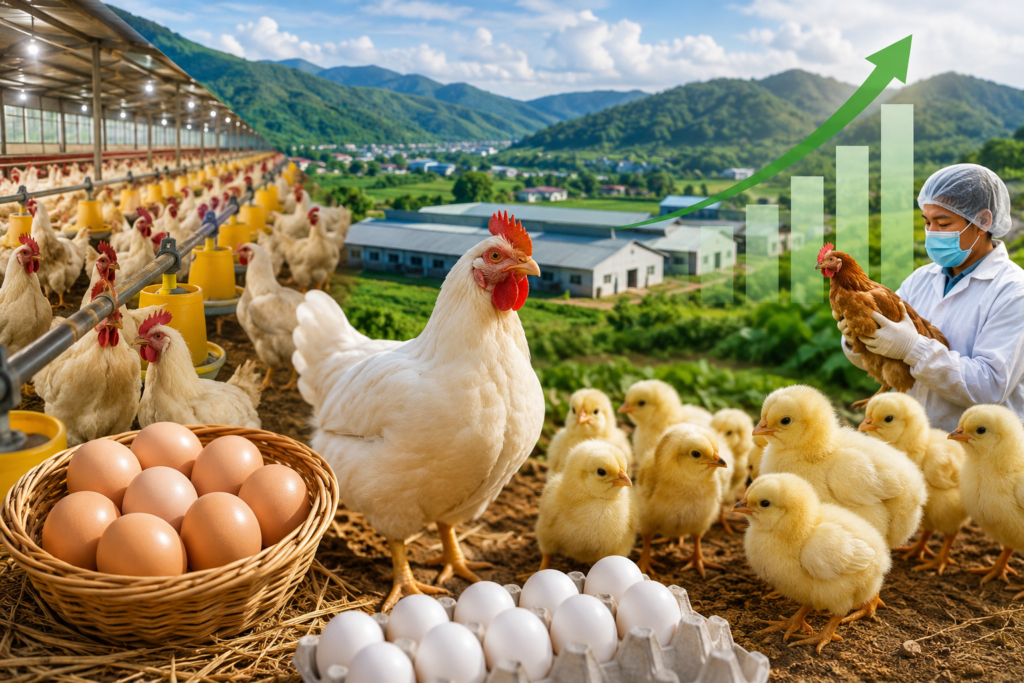
Major Poultry Farming Types in Manipur
Broiler Farming
Broilers are raised for meat production and usually reach market weight within 35–45 days.
Benefits include:
- Quick returns
- High demand
- Fast production cycle
Layer Farming
Layer farming focuses on egg production.
Advantages include:
- Daily income
- Stable market demand
- Long production cycle
Backyard Poultry Farming
Backyard poultry remains popular in rural villages.
Benefits include:
- Low investment
- Natural feeding
- Organic production
- Additional household income
Backyard poultry also contributes significantly to nutritional security in rural communities.
Economic Importance of Poultry Farming
The poultry sector contributes to Manipur’s economy by:
- Increasing rural income
- Reducing unemployment
- Supporting women’s self-employment
- Improving nutritional security
- Encouraging entrepreneurship
- Strengthening local food production
Research shows that poultry farming plays a significant role in supporting livelihoods and food security across several districts in Manipur.
Challenges Facing the Poultry Industry in Manipur
Despite its growth, the poultry sector faces several challenges.
High Feed Costs
Feed accounts for the largest share of production expenses, making profitability sensitive to price fluctuations.
Disease Management
Common diseases include:
- Newcastle Disease
- Avian Influenza
- Coccidiosis
- Infectious Bursal Disease (IBD)
Vaccination and biosecurity are essential for preventing outbreaks.
Transportation Issues
Many poultry farmers face transportation challenges due to difficult terrain and logistics, increasing production costs.
Limited Hatcheries
Although government breeding farms are expanding, many farmers still depend on chick supplies from outside the state.
Market Competition
Imported poultry products from neighboring states often compete with locally produced birds.
Studies on poultry farming in Manipur identify feed costs, disease outbreaks, and infrastructure limitations among the main constraints affecting sustainable growth.
Opportunities for Poultry Entrepreneurs
The future looks promising for poultry entrepreneurs in Manipur.
Potential business opportunities include:
- Commercial broiler farms
- Layer farms
- Hatcheries
- Poultry feed manufacturing
- Egg wholesale business
- Organic poultry farming
- Poultry equipment supply
- Veterinary services
- Poultry waste management
- Meat processing units
Growing demand creates opportunities for startups and established businesses alike.
Technology Transforming Poultry Farming
Modern poultry farms are increasingly adopting:
- Automatic feeders
- Watering systems
- Climate-controlled poultry sheds
- Digital farm management
- Disease monitoring
- Vaccination scheduling
- Biosecurity protocols
These technologies improve productivity while reducing operational costs.
Tips for Successful Poultry Farming in Manipur
To maximize profits:
- Purchase healthy chicks from reliable hatcheries.
- Maintain proper farm hygiene.
- Follow vaccination schedules.
- Use quality poultry feed.
- Ensure clean drinking water.
- Monitor bird health daily.
- Maintain proper ventilation.
- Keep accurate production records.
- Consult veterinarians regularly.
- Follow strict biosecurity measures.
Future of the Poultry Industry in Manipur
The future of the poultry industry in Manipur appears highly promising. Rising consumer demand, better government support, improved breeding infrastructure, and increasing awareness of scientific poultry management are expected to drive further growth. At the national level, India’s poultry sector is also projected to continue expanding due to strong demand for affordable protein, creating additional opportunities for producers.
With continued investment in technology, training, disease control, and supply chains, Manipur has the potential to become one of the leading poultry-producing states in Northeast India.
Conclusion
The poultry industry in Manipur is becoming an important driver of rural development and economic growth. From backyard poultry farming to commercial broiler and layer operations, the sector offers excellent opportunities for farmers, entrepreneurs, and investors.
Although challenges such as feed costs, disease management, and infrastructure remain, improved government initiatives, modern farming practices, and rising market demand position the industry for long-term success. Farmers who adopt scientific management and strong biosecurity practices will be well placed to benefit from the sector’s continued expansion.