When people think about India’s poultry industry, they usually focus on egg production, poultry farms, or market demand. However, one essential product often goes unnoticed—the egg tray.
Every day, millions of eggs travel from farms to wholesalers, retailers, restaurants, and households across India. Without reliable egg trays, a significant portion of these eggs would break during handling and transportation, leading to financial losses and food waste.
At the same time, egg trays are becoming an important part of India’s growing circular economy. Made primarily from recycled paper and cardboard, they help transform waste materials into useful products while supporting sustainable business practices.
As India continues to focus on waste reduction, recycling, and eco-friendly manufacturing, egg trays are playing a much bigger role than most people realize.
What Is a Circular Economy?
A circular economy is an economic system designed to keep materials in use for as long as possible. Instead of following the traditional “use and throw” model, it focuses on recycling, reusing, and repurposing resources.
In simple terms:
- Waste becomes a resource.
- Materials are reused instead of discarded.
- Products are designed to have a second life.
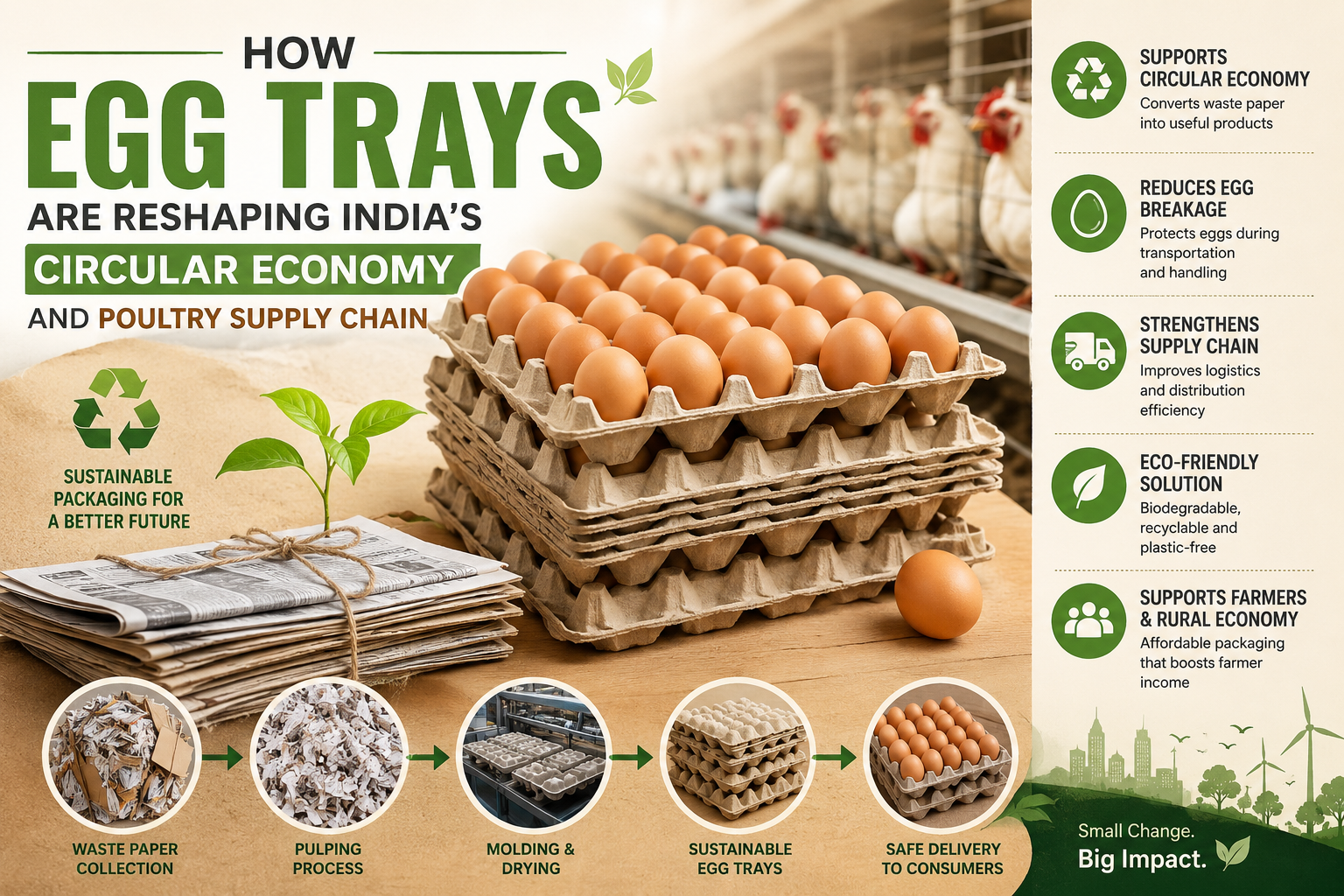
Egg tray manufacturing is a perfect example of this concept in action. Waste paper, old newspapers, cardboard boxes, and office paper are collected, processed into pulp, and converted into new egg trays.
This process reduces waste while creating products that serve a critical role in the food supply chain.
Why Egg Trays Matter in India’s Poultry Industry
India is one of the world’s largest egg-producing countries. According to government and industry reports, egg consumption continues to rise due to population growth, urbanization, and increasing awareness of protein-rich diets.
With billions of eggs produced annually, safe packaging has become essential.
Egg trays help by:
- Protecting eggs during transportation
- Reducing breakage rates
- Improving storage efficiency
- Making bulk handling easier
- Supporting long-distance distribution
Without proper packaging, farmers and distributors would face higher losses and reduced profits.
Turning Paper Waste into Valuable Products
One of the biggest advantages of molded pulp egg trays is that they are made from recycled materials.
Manufacturers collect:
- Used newspapers
- Carton waste
- Corrugated cardboard
- Office paper scraps
- Packaging waste
These materials are processed into pulp and molded into trays designed to hold eggs securely.
This recycling process provides several benefits:
Reduces Landfill Waste
Paper waste is one of the largest contributors to municipal solid waste. Recycling it into egg trays prevents tons of usable material from ending up in landfills.
Conserves Natural Resources
Using recycled paper reduces the need for fresh raw materials and lowers demand for virgin paper production.
Supports Waste Collection Networks
The egg tray industry creates demand for recyclable paper, encouraging collection and sorting activities across cities and rural areas.
Reducing Food Waste Through Better Packaging
Food waste is a major challenge worldwide, and eggs are among the most fragile food products.
Even minor impacts during transportation can cause cracks and breakage.
High-quality egg trays help solve this problem by:
- Keeping eggs separated from one another
- Absorbing shocks during transportation
- Preventing movement inside crates
- Maintaining product quality
For poultry farmers, fewer broken eggs mean higher profits. For consumers, it means better-quality products reaching the market.
Strengthening the Poultry Supply Chain
The poultry supply chain depends on efficiency.
Eggs typically move through multiple stages:
- Poultry farms
- Collection centers
- Distributors
- Wholesalers
- Retail stores
- Consumers
At every stage, eggs need protection.
Egg trays make transportation safer and more organized. Their stackable design allows businesses to transport large quantities while minimizing damage.
As a result:
- Logistics become more efficient.
- Handling costs decrease.
- Product losses are reduced.
- Supply chain reliability improves.
This is especially important in a country as large and diverse as India, where eggs often travel hundreds of kilometers before reaching consumers.
Supporting Small and Medium Poultry Farmers
Many poultry farms in India operate on a small or medium scale. These businesses often have limited resources and cannot afford expensive packaging solutions.
Recycled paper egg trays provide an affordable option that helps farmers:
- Protect their products
- Reach distant markets
- Reduce transportation losses
- Increase profitability
By lowering packaging costs and improving product safety, egg trays contribute directly to the growth of rural poultry businesses.
Environmental Benefits of Egg Trays
As businesses and consumers become more environmentally conscious, sustainable packaging is gaining importance.
Compared to plastic packaging, molded pulp egg trays offer several environmental advantages.
Biodegradable
Paper-based egg trays naturally decompose over time without leaving harmful residues.
Recyclable
Used egg trays can often be recycled again, extending the lifecycle of the material.
Lower Plastic Usage
Choosing paper trays helps reduce dependence on single-use plastic packaging.
Reduced Carbon Footprint
Recycling existing paper generally requires fewer resources than producing new paper from raw materials.
These benefits make egg trays an environmentally responsible choice for the poultry industry.
Technology Is Making Egg Tray Manufacturing More Efficient
The egg tray industry has evolved significantly over the past decade.
Modern manufacturing facilities now use:
- Automated pulp molding machines
- Energy-efficient drying systems
- Improved quality control processes
- High-capacity production lines
These advancements help manufacturers produce stronger and more consistent trays while reducing production costs and resource consumption.
As demand continues to grow, technology will play an even bigger role in improving sustainability and efficiency.
The Future of Egg Trays in India
Several trends suggest a strong future for the egg tray industry:
Growing Egg Consumption
Rising demand for protein-rich foods is increasing egg production across the country.
Focus on Sustainable Packaging
Businesses are actively seeking eco-friendly alternatives to plastic packaging.
Expansion of Recycling Infrastructure
Improved waste collection and recycling systems will provide more raw materials for egg tray manufacturing.
Government Sustainability Initiatives
Policies promoting waste reduction and resource efficiency are expected to support circular economy industries.
Together, these factors position egg trays as a key component of India’s sustainable growth strategy.
Conclusion
Egg trays may appear simple, but their impact on India’s economy and environment is significant. By converting waste paper into useful packaging, reducing food waste, supporting poultry farmers, and promoting sustainable manufacturing, they have become an important part of both the poultry supply chain and the circular economy.
As India moves toward greener business practices and more efficient resource utilization, the demand for eco-friendly egg trays is likely to continue growing. Their success demonstrates how practical, low-cost innovations can deliver real economic and environmental benefits while supporting one of the country’s most important agricultural industries.